
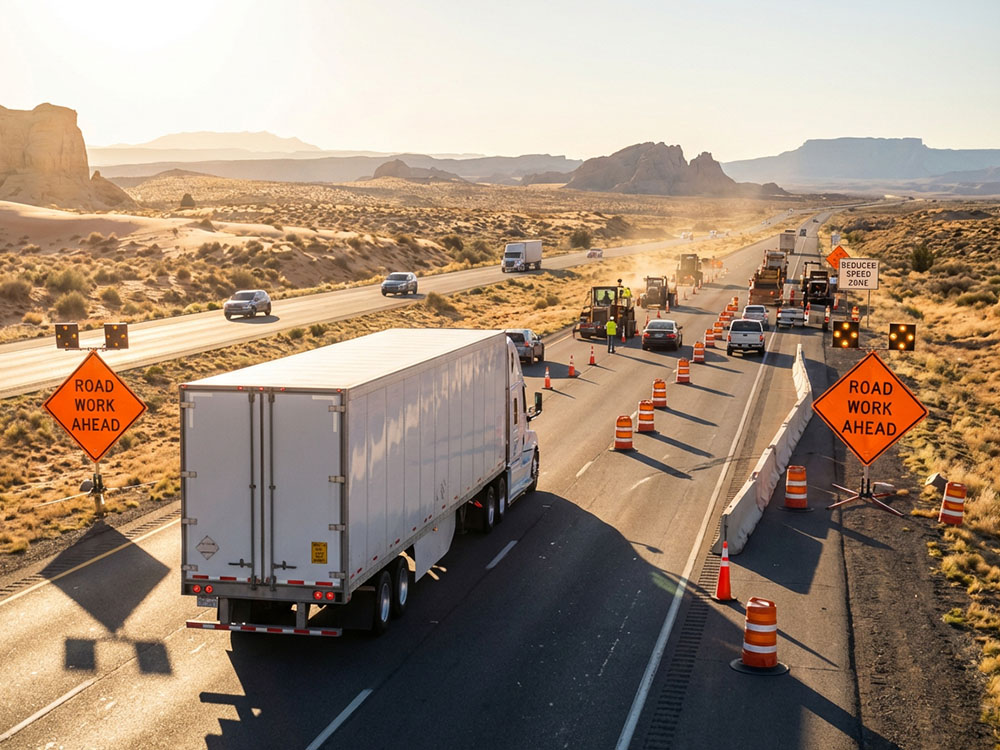
As Work Zone Awareness Month continues, truckers across the United States report a consistent and highly specific pattern. Work zones tend to appear exactly when driving conditions are finally going smoothly.
Drivers say the experience is familiar. Traffic is flowing, speed is steady, and timing feels manageable. Then, without warning, signs appear, lanes narrow, and everything changes.
“It’s always right when things start working,” said a driver in Indiana.
According to an entirely unofficial estimate, over 82% of drivers believe work zones are placed precisely where they were about to make good time.
Drivers report that the transition is immediate. Open highway turns into reduced lanes, with cones appearing in long stretches and speed limits dropping just enough to require constant adjustment.
“You get comfortable,” one driver explained. “That’s when it happens.”
Despite the frustration, most drivers acknowledge the importance of work zones. Road improvements, maintenance, and safety upgrades all depend on these areas, even if timing feels inconvenient.
“You understand why they’re there,” one driver said. “You just wish they had waited five more miles.”
Truckers say the key is adapting quickly. Slowing down, increasing awareness, and maintaining patience become essential once entering a work zone.
Veteran drivers emphasize staying alert and respecting posted limits, noting that conditions can change quickly and require full attention.
As one driver summarized, “You don’t fight it. You adjust and keep going.”
*All articles on this website are crafted with human creativity and a touch of AI-inspired humor. These stories are entirely fictional, written purely for fun and entertainment, and should not be taken as factual or advice. Keep smiling and stay safe! And remember – don’t read while driving; tune in to our podcast instead 🙂

